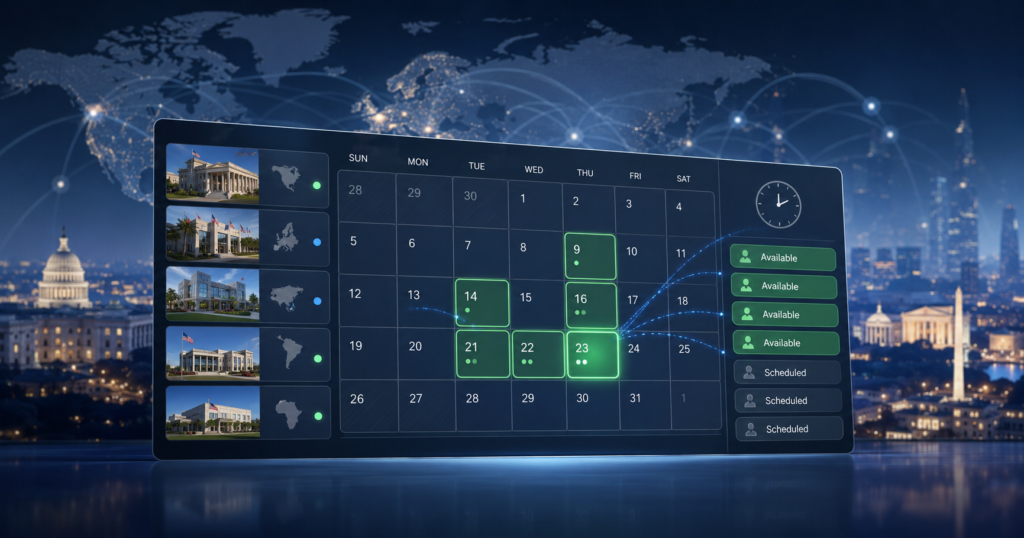
One of the most confusing parts of the U.S. visa process is how embassy appointment slots appear — and disappear — inside scheduling systems.
Many applicants assume appointment calendars work like airline reservations:
- open continuously,
- update instantly,
- and always display all available dates.
In reality, U.S. embassy appointment systems operate very differently.
Some embassies release appointments gradually. Others release them in batches. Some update predictably, while others appear almost random from the outside.
Understanding how these scheduling systems work can help applicants better interpret changing availability and avoid common misunderstandings about “missing” appointments.
Embassies Do Not Usually Release Unlimited Future Inventory
One of the biggest misconceptions about visa scheduling systems is the belief that embassies immediately publish every available interview slot months into the future.
Most do not.
Instead, embassies often control appointment inventory carefully based on:
- staffing levels,
- operational capacity,
- interview demand,
- security procedures,
- and internal planning.
This means:
- future appointments may exist internally,
- but not yet appear publicly in scheduling systems.
As a result, applicants may see:
“No Appointments Available”
even while additional interview inventory is expected later.
Why Embassies Release Slots Gradually
Embassies operate in constantly changing conditions.
Consular sections must balance:
- interview demand,
- staffing availability,
- security requirements,
- local conditions,
- and seasonal surges.
Releasing appointments gradually gives embassies flexibility to:
- adjust staffing,
- respond to changing demand,
- prioritize urgent categories,
- and manage operational disruptions.
This is especially important during:
- student visa seasons,
- holiday travel surges,
- staffing shortages,
- or political disruptions.
Common Appointment Release Patterns
Different embassies use different scheduling approaches.
There is no single global system shared identically across all locations.
However, many embassies tend to follow one or more common patterns.
1. Rolling Daily Availability
Some embassies continuously release small numbers of appointments over time.
This creates calendars that:
- change frequently,
- occasionally show sudden openings,
- and may appear inconsistent from day to day.
Applicants monitoring these systems often notice:
- isolated openings,
- small clusters of dates,
- or rapidly disappearing slots.
2. Batch Releases
Other embassies release large groups of appointments simultaneously.
In these situations:
- calendars may remain empty for extended periods,
- then suddenly display many available dates at once.
This often creates the impression that:
“new appointments suddenly appeared out of nowhere”
when in reality the embassy simply released additional scheduling inventory.
Batch releases are one reason some applicants monitor appointment systems repeatedly over time.
3. Seasonal Scheduling Waves
Some visa categories experience strong seasonal demand patterns.
For example:
- student visas often surge before academic semesters,
- tourist demand may increase before holidays,
- and temporary worker programs may follow employment cycles.
Embassies may adjust slot releases accordingly.
This means certain categories may receive:
- expanded inventory during peak seasons,
- or reduced availability during lower-priority periods.
4. Cancellation-Based Availability
Appointment systems also change constantly because applicants:
- reschedule interviews,
- cancel appointments,
- fail to appear,
- or abandon applications.
When this happens, previously occupied slots may reappear in scheduling systems.
Some embassies recycle these openings immediately, while others process them in batches.
This is one reason appointment calendars can fluctuate dramatically throughout the day.
Why Appointment Availability Can Feel Random
From the applicant’s perspective, embassy scheduling systems often appear unpredictable.
This happens because users only see the public-facing side of a much larger operational process.
Behind the scenes, embassies are balancing:
- staffing schedules,
- security procedures,
- interview categories,
- local conditions,
- and overall workload management.
Applicants generally do not see:
- upcoming inventory not yet released,
- internal scheduling holds,
- staffing changes,
- or category prioritization decisions.
As a result, availability can sometimes appear inconsistent even when the embassy is following an organized internal process.
Why Some Embassies Open Large Numbers Of Appointments Suddenly
Applicants occasionally report:
- hundreds of new appointments appearing,
- major wait-time drops,
- or sudden calendar expansions.
Several things can cause this:
- increased staffing,
- operational recovery,
- backlog reduction efforts,
- system updates,
- or newly released scheduling inventory.
In some cases, embassies may intentionally expand appointment capacity to reduce unusually long wait times.
However, these improvements are not always permanent.
Do Embassies Release Appointments At Specific Times?
Some applicants try to identify:
- exact release hours,
- ideal monitoring times,
- or “secret” scheduling windows.
In practice, release timing varies heavily by location.
Some embassies appear to update:
- during local business hours,
- overnight,
- early mornings,
- or irregularly.
There is no universal global release schedule shared across all embassies.
Patterns that appear reliable in one country may not apply elsewhere.
Why Appointment Slots Disappear So Quickly
High-demand locations may have:
- thousands of applicants monitoring the same system,
- automated alerts,
- rapid rescheduling activity,
- and constant competition for openings.
As a result, newly released appointments may disappear within minutes or even seconds.
This is especially common for:
- tourist visas,
- student visas during peak seasons,
- and locations with severe backlogs.
How Applicants Can Respond Realistically
Applicants often become frustrated when calendars remain empty or openings disappear quickly.
However, understanding how embassies manage inventory can help create more realistic expectations.
In many cases:
- appointment availability is dynamic,
- inventory changes over time,
- and conditions may improve unexpectedly.
This does not guarantee quick access to interviews, but it does explain why appointment systems fluctuate so heavily.
How Visa Wait Hub Helps Track Changing Conditions
Because appointment conditions change constantly, many applicants monitor:
- wait-time trends,
- regional backlog patterns,
- and changing embassy conditions over time.
Visa Wait Hub tracks global visa wait conditions to help users better understand:
- long-term trends,
- regional appointment pressure,
- and changing embassy availability patterns worldwide.
Understanding broader trends can provide useful context when local appointment systems appear inconsistent or unpredictable.
Final Thoughts
U.S. embassy appointment systems are far more dynamic than many applicants realize.
Appointments are not always released continuously or predictably. Instead, embassies manage scheduling inventory based on:
- operational capacity,
- staffing,
- local demand,
- visa priorities,
- and changing conditions on the ground.
This is why appointment calendars can sometimes appear empty one day and suddenly open the next.
Understanding how these systems work behind the scenes can help applicants interpret changing appointment conditions more realistically and reduce unnecessary confusion during the visa process.
Related Reading
- How U.S. Visa Appointments Actually Work (Step-by-Step)
- Why Some U.S. Embassies Have No Available Appointments
- Why Visa Wait Times Change (And What It Means)
- How Visa Appointment Cancellations Work
Official Resources
Disclaimer
Visa Wait Hub is an independent informational platform and is not affiliated with the U.S. government or any embassy, consulate, or immigration authority.
This article is provided for general educational purposes only and does not constitute legal advice. Immigration laws and visa procedures can change frequently. For official guidance regarding your specific case, consult the U.S. Department of State, USCIS, or a qualified immigration attorney.