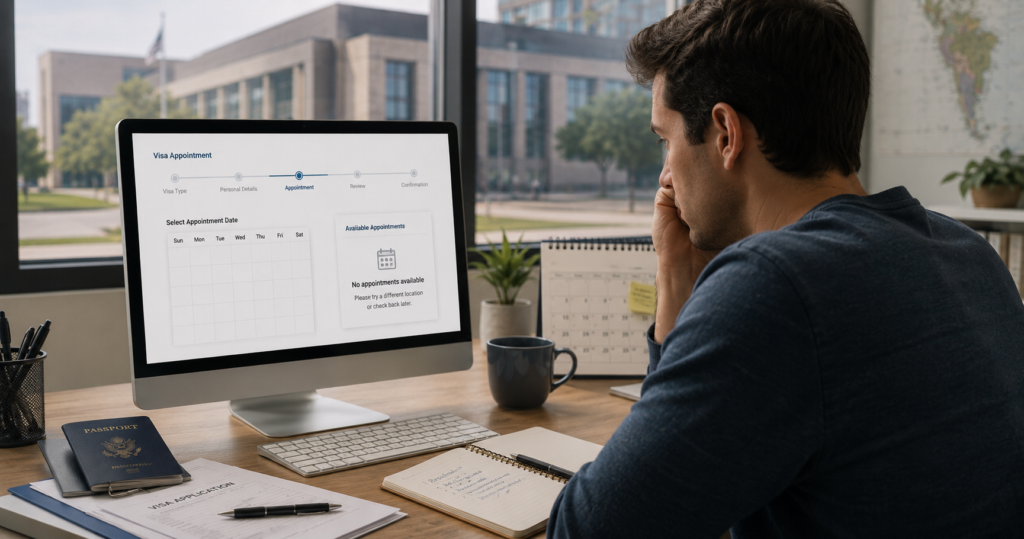
Many visa applicants eventually encounter one of the most frustrating messages in the U.S. visa system:
“No Appointments Available”
For some people, this lasts only a few days. For others, it can continue for weeks or even months.
This situation causes enormous confusion because applicants often assume:
- the embassy has stopped processing visas,
- the website is broken,
- or appointments have permanently disappeared.
In reality, “No Appointments Available” can mean several very different things depending on the embassy, visa category, and current operating conditions.
This guide explains why this happens, what it usually means behind the scenes, and what applicants can realistically do about it.
“No Appointments Available” Does Not Always Mean Interviews Are Closed
One of the biggest misunderstandings about the U.S. visa system is the assumption that appointment calendars operate like airline bookings or hotel reservations.
They do not.
Most embassies control appointment inventory carefully and do not release every future slot at once.
This means a scheduling system may temporarily display:
“No Appointments Available”
even while the embassy fully intends to continue processing interviews.
In many cases, it simply means:
- currently released slots are full,
- future inventory has not yet been released,
- or the embassy is adjusting scheduling capacity internally.
Why Appointment Availability Changes So Much
Every embassy operates under different local conditions.
Some locations process extremely high application volume every day, while others handle far fewer applicants.
Several major factors influence appointment availability.
1. High Demand
The most common reason appointments disappear is simple:
- too many applicants competing for limited interview capacity.
This is especially common for:
- B1/B2 tourist visas,
- student visa seasons,
- and heavily populated regions.
Demand can spike rapidly during:
- holiday periods,
- academic admission cycles,
- major conferences,
- tourism surges,
- or after operational disruptions.
In some countries, demand remains consistently high year-round.
2. Limited Staffing
Embassies do not have unlimited consular officers.
Interview capacity depends on:
- staffing levels,
- officer availability,
- training cycles,
- security procedures,
- and local operational conditions.
Even relatively small staffing reductions can significantly impact appointment inventory.
This is one reason nearby countries can sometimes show dramatically different wait times despite geographic proximity.
3. Appointment Slots Are Often Released In Batches
Many applicants assume appointment systems update continuously in real time.
Some do — but many do not.
Certain embassies release interview inventory:
- daily,
- weekly,
- monthly,
- or in irregular batches.
This means:
- calendars may appear completely full,
- then suddenly show large numbers of openings.
The release pattern varies widely by location.
4. Embassies Sometimes Pause Scheduling
Temporary pauses can occur for many reasons, including:
- staffing shortages,
- system maintenance,
- security concerns,
- political instability,
- weather events,
- public holidays,
- or operational restructuring.
During these periods, appointment systems may continue functioning while showing little or no available inventory.
This often creates confusion because the scheduling website itself still appears active.
5. Some Visa Categories Receive Priority
Not all visa categories are handled equally.
Embassies may prioritize:
- student visas before academic semesters,
- urgent medical travel,
- diplomatic travel,
- petition-based employment visas,
- or immigrant visa processing.
When this happens, lower-priority categories may experience:
- reduced appointment inventory,
- slower slot releases,
- or longer wait times.
6. Cancellations And Rescheduling Affect Availability
Appointment calendars constantly change because applicants:
- cancel interviews,
- reschedule dates,
- fail to appear,
- or change visa plans.
This means appointment availability is rarely static.
A location showing:
“No Appointments Available”
today may suddenly display openings tomorrow if:
- cancellations occur,
- additional inventory is released,
- or staffing conditions improve.
This is one reason many applicants repeatedly monitor scheduling systems.
Why Wait Times Can Stay High For Long Periods
Once an embassy develops a large backlog, reducing wait times is not always quick or easy.
Even if staffing improves, embassies still need to process:
- newly arriving applicants,
- existing backlogs,
- and ongoing daily interview demand simultaneously.
This is why some locations recover quickly while others remain heavily delayed for extended periods.
Global conditions can also influence multiple embassies at once.
Does “No Appointments Available” Mean You Should Apply In Another Country?
Some applicants consider applying outside their home country when local wait times become extremely long.
This is sometimes possible, but policies vary significantly by embassy and country.
Applicants should understand:
- not all embassies accept third-country nationals,
- some locations prioritize local residents,
- and interview eligibility rules may differ.
Applying abroad can also create:
- travel costs,
- scheduling complications,
- and additional administrative risks.
Applicants should always review official embassy guidance carefully before making international scheduling plans.
How To Monitor Changing Appointment Conditions
Because appointment availability changes frequently, many applicants monitor:
- embassy scheduling systems,
- cancellation patterns,
- seasonal trends,
- and public wait-time data.
Visa Wait Hub tracks visa wait conditions globally to help users better understand:
- changing appointment conditions,
- regional wait-time patterns,
- and long-term trends across embassies.
Understanding broader patterns can help applicants set more realistic expectations and identify locations experiencing unusually high delays.
Common Mistakes Applicants Make
Several mistakes can make the process more frustrating.
These include:
- assuming “No Appointments Available” means permanent closure,
- panicking after short-term inventory disappears,
- relying on unofficial rumors,
- misunderstanding seasonal surges,
- or repeatedly changing strategies too quickly.
In many cases, appointment conditions simply fluctuate over time.
Final Thoughts
“No Appointments Available” is one of the most misunderstood parts of the U.S. visa appointment system.
In most situations, it does not mean interviews have permanently stopped. More often, it reflects a combination of:
- high demand,
- limited capacity,
- inventory release timing,
- and changing operational conditions.
Because every embassy operates differently, appointment availability can vary dramatically around the world.
Understanding these underlying factors can help applicants make more informed decisions and avoid unnecessary confusion during the visa process.
Related Reading
- How U.S. Visa Appointments Actually Work (Step-by-Step)
- Why Visa Wait Times Change (And What It Means)
- How Visa Appointment Cancellations Work
- How To Get An Earlier U.S. Visa Appointment
Official Resources
Disclaimer
Visa Wait Hub is an independent informational platform and is not affiliated with the U.S. government or any embassy, consulate, or immigration authority.
This article is provided for general educational purposes only and does not constitute legal advice. Immigration laws and visa procedures can change frequently. For official guidance regarding your specific case, consult the U.S. Department of State, USCIS, or a qualified immigration attorney.